OwenGregorian
Politics • Education • Science & Tech
Scientists reveal 'neural tourniquet' that can stop bleeding with nerve stimulation | Liam Drew, LiveScience
December 04, 2024
post photo preview

Researchers stimulated the vagus nerve in healthy volunteers and showed it triggered blood clot formation, which they say could be used to prevent blood loss after surgery.

Zapping the vagus nerve promotes blood clotting, new research suggests.

These findings are the first evidence in humans of a "neural tourniquet," or a brain-based pathway that could reduce bleeding, said study co-author Dr. Jared Huston, a trauma surgeon at the Firestein Institutes for Medical Research at Northwell Health in New York.

If a future clinical trial directly shows that the nerve stimulation decreases blood loss, the technique could be used before planned surgeries to protect patients from excessive bleeding, Huston told Live Science.

Around 1.5% of surgeries are complicated by haemorrhaging, or excessive blood loss, and some degree of bleeding is associated with all surgeries. Surgeons currently rely on sutures, bandages and tourniquets — devices that stop blood from flowing to part of the body — to staunch bleeding.

But Huston wondered whether making blood less likely to escape in the first place would make surgery safer. "Preventing a problem is always better than dealing with it after the fact," he said.

Huston and his collaborators first wondered if the vagus nerve might promote blood clotting nearly 20 years ago, after the nerve was found to modulate inflammation. The vagus nerve, which originates in the brain and branches out to other organs, controls the parasympathetic nervous system — the rest-and-digest counterpart to the "fight-or-flight" sympathetic nervous system.

Initial experiments in mice and pigs showed that stimulating the vagus could, indeed, reduce blood loss following a small cut. "We then spent the better part of a decade trying to figure out exactly how it works," Huston said.

Last year, Huston's team showed that vagus nerve stimulation activates a type of immune cell, called T cells, in the spleen, the organ that helps filter germs and old cells out of blood. These T cells then activate platelets in the spleen; platelets are the cell fragments that set off blood clot formation.

Upon re-entering circulation, the primed platelets are better able to respond to injury-related cues. In mice with hemophilia, a disorder in which blood can't clot properly, nerve stimulation reduced bleeding, the team found.

To test whether the same mechanism existed in humans, Huston's team collaborated with the Dallas-based biomedical company Five Liters to recruit healthy volunteers. They used an approved device to zap the auricular branch of vagus nerve, which runs behind the ear, for 30 minutes in each person. They collected blood samples before and after the treatment.

Following vagus nerve stimulation, the volunteers' blood contained higher levels of markers of blood platelet activation.

These results, presented in October at the Society for Neuroscience conference in Chicago, showed for the first time "that there is a neural tourniquet pathway in humans," Huston said. "And it appears that we can activate this neural tourniquet pathway non-invasively." More details of the trial can be found at http://ClinicalTrials.gov.

While the past study results in animals are "very intriguing," more work needs to be done to show vagus nerve stimulation can actually stop bleeding in humans, Peder Olofsson, a professor of bioelectronic medicine at the Karolinska Institute in Stockholm, Sweden, told Live Science.

"Ultimately, measurements of bleeding times, bleeding volumes, and patient outcomes will be key" to demonstrating the clinical value of activating the vagus nerve through the skin, said Olofsson, who was not involved in the study.

Huston agreed. "The next study will have to be in an actual clinical disease where the patients are bleeding one way or another," he said.

Another issue is showing that the stimulators can produce consistent results, Olofsson noted. "Non-invasive stimulators" — while much quicker and easier to use than implanted stimulators — "often show less consistent physiological effects."

Vagus nerve stimulation is already widely used in epilepsy and depression, so the risk of side effects is likely low, Huston added. If his findings can be replicated and extended in larger trials, surgeons might use a brief period of vagus nerve stimulation prior to planned surgeries.

Read more:

https://www.livescience.com/health/surgery/scientists-reveal-neural-tourniquet-that-can-stop-bleeding-with-nerve-stimulation


community logo
Join the OwenGregorian Community
To read more articles like this, sign up and join my community today
0
What else you may like…
Videos
Posts
Articles
Over 100 Navy SEALS Set to Descend on Washington D.C. in Explosive Show of Support for Army Veteran Pete Hegseth | The Gateway Pundit

Washington, D.C., is bracing for an unprecedented show of support as over 100 Navy SEALs prepare to descend on the nation’s capital, standing in solidarity with President-elect Donald Trump’s nominee for Secretary of Defense, Pete Hegseth.

Hegseth, a decorated Army combat veteran and prominent conservative voice, has faced relentless media attacks in recent weeks.

The fake news media have leveled accusations ranging from outdated and disproven sexual misconduct claims to allegations of public drunkenness and financial mismanagement during his tenure at Concerned Veterans for America (CVA).

Critics on the right are pushing back hard against what they view as a deliberate effort to derail a nominee poised to shake up the Defense Department.

Randy Lair, a trustee at CVA, categorically denied the whistleblower allegations, describing them as “sensational fabrications designed to undermine a patriot.”

In an exclusive letter to the New York Post, Lair emphasized that Hegseth left CVA on good ...

00:01:07
‘Charlatan’ Vaccine Promoter Dr. Peter Hotez Says Multiple Viruses Will be Unleashed on America the Day After Trump Takes Office | Cristina Laila, The Gateway Pundit

‘Charlatan’ vaccine promoter Dr. Peter Hotez said multiple viruses will be unleashed on America one day after Trump is inaugurated next month.

“We have some big picture stuff coming down the pike starting on January 21st,” Hotez said to MSNBC’s Nicolle Wallace before rattling off a list of viruses:

  • Bird flu
  • New Coronavirus
  • SARS
  • Mosquito-transmitted viruses
  • Dengue
  • Zika
  • Oropouche virus
  • Yellow fever
  • Pertussis/Whooping cough
  • Measles
  • Polio

Of course, Dr. Hotez failed to mention the measles outbreaks and Polio cases are primarily a problem with the illegal migrants invading the US.

Dr. Peter Hotez previously made headlines for refusing to debate author, activist, then-presidential candidate, attorney and now Trump’s nominee for HHS, Robert Kennedy, Jr., on the effectiveness of the COVID-19 vaccines.

Rather than accept the challenge, Hotez lashed out at both Robert Kennedy Jr. and Joe Rogan, who invited the two to debate the facts on his show.

Hotez refused and ...

00:01:30
Mysterious 'Car-Sized Drones' Over New Jersey Prompt FBI Investigation | ZeroHedge

Several weeks of mysterious drone swarms over the skies of one New Jersey county near the military research and manufacturing facility Picatinny Arsenal have sparked concerns among residents and prompted an FBI investigation.

"It's kind of unsettling," Mike Walsh, a Morris County resident who has spotted the drones on numerous occasions, told local media outlet PIX11 News.

He said some drones "are very big, probably the size of a car."

Since Nov. 18, Walsh and many other residents have spotted these drones in the night sky.

"They're kind of go slow," he said, adding, "They come towards you. Then they change direction a little. They're all going different ways."

We first detailed the story on Nov. 19 in a note titled "Spy Drones? "Unusual Activity" Reported Over Morris County, New Jersey, Near Military Research Facility."

The potential national security threat piqued our interest, considering multiple reports that the mysterious drones were observed near Picatinny Arsenal.

PIX11 News said...

00:02:18
post photo preview
The Afterparty X Spaces - 8/8/26

It’s Saturday, and that means it’s time for The Afterparty!

We start with the Simultaneous Sip, then you get the mic.

Bring a take on what we covered on the Scott Adams School with Erica and Marcela and the big news of the week — Florida subpoenaing Fauci, the Maricopa voter data breach, or the DSA’s useful idiots getting demolished by Mike Rowe.

Everyone is welcome to speak. Two rules:

1. Be respectful
2. Don’t interrupt

Request the mic. Bring friends.

https://x.com/owengregorian/status/2086081721661812750?s=46&t=za1kQOtu4Dod6Yb1P465eg

Sunday Simultaneous Sip 8/2/26 — come hang out with us!

Grab your coffee (or whatever makes you happy), we’ll do the sip together, then chat about today’s news for about an hour.

  • Walz’s Minnesota letting people vote if someone “vouches” for them

  • An auditor saying 200,000+ NYC mayoral votes look suspicious

  • The DSA winning a $5.2 million inheritance lawsuit, California offering free meth and crack pipes…

Bring whatever’s on your mind. I’d love to hear from you.

Everyone’s welcome to speak. Just be kind, and don’t interrupt. See you there!

https://x.com/owengregorian/status/2083897876124459424?s=46&t=za1kQOtu4Dod6Yb1P465eg

post photo preview
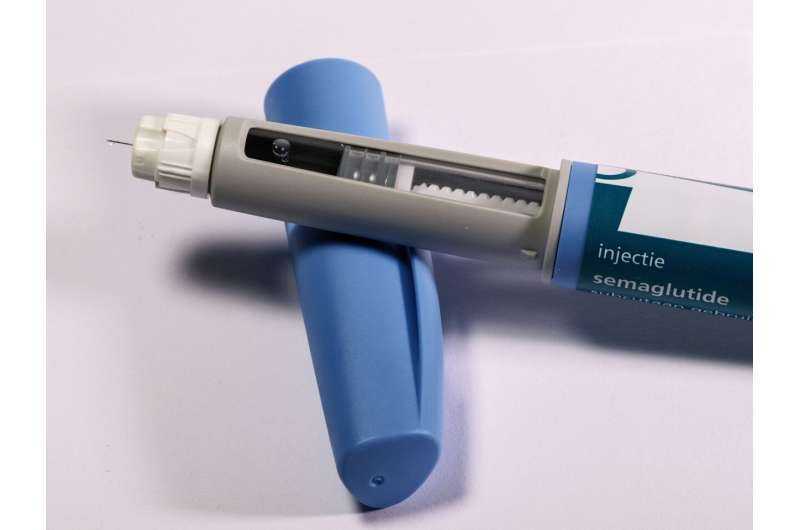
Can Ozempic prevent cancer? A doctor explains why the headlines are easy to misread | Ziyad Al-Aly, Medical Xpress

In the weeks around the 2026 annual meeting of the American Society of Clinical Oncology, my phone kept buzzing with alerts about GLP-1 drugs and cancer. The headlines were everywhere—from NPR and The Washington Post to Substack and heated exchanges on social media—all circling the same claim: Ozempic might lower the risk of cancer.

Only for Supporters
To read the rest of this article and access other paid content, you must be a supporter
Read full Article
post photo preview
European Drone Warfare Goes Operational: $49B in Commitments This Month | Roger Satterfield, Techtimes

In the first two weeks of July 2026, five of the largest defense investment decisions in modern European history arrived within days of one another: a $1.8 billion private fundraise for an AI defense startup, a NATO-wide $40 billion counter-drone commitment, a single German contract to deploy 50,000 AI-guided attack drones in Ukraine, a £5 billion British transformation program explicitly committing to weapons that make targeting decisions without per-strike human authorization, and a fresh $1.2 billion raise for a drone maker that positions itself as Europe's answer to Lockheed Martin. The convergence, reported today in a major CNBC synthesis, is not coincidental. It reflects a structural judgment: autonomous, software-defined warfare is no longer experimental. What drove each of these decisions to the same two-week window is the same thing driving all of them — a piece of palm-sized hardware that has quietly validated the entire premise of the investment surge in Ukrainian skies.

Only for Supporters
To read the rest of this article and access other paid content, you must be a supporter
Read full Article
post photo preview
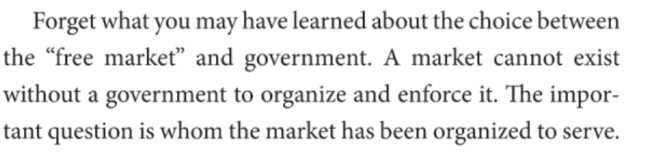
Democrats Turn To ‘Economic Democracy,’ And You Already Know What They Mean | Chris Bray, The Federalist

“We cannot save our democracy unless we democratize our economy.” A truck is backing up to the loading dock, delivering a giant cargo of old wine in new bottles. You’re going to be hearing more of this language.

Only for Supporters
To read the rest of this article and access other paid content, you must be a supporter
Read full Article
Available on mobile and TV devices
google store google store app store app store
google store google store app tv store app tv store amazon store amazon store roku store roku store
Powered by Locals