OwenGregorian
Politics • Education • Science & Tech
A Keto Diet Could Enhance Cancer Drug Effectiveness | Paige Nicklas, TheScientist
November 30, 2024
post photo preview

In mice, a ketogenic diet remodeled the translatome of pancreatic cancer cells, rendering them vulnerable to targeted therapy.

Pill containers often include warnings about specific foods or beverages that should be avoided when taking certain medications. For example, grapefruit juice interferes with the breakdown of statins in the intestines, causing the drug to remain active in the body for too long.1 Similarly, consuming alcohol with medications can be dangerous as it may alter the liver’s metabolism of the drug, leading to added or exaggerated side effects and possible liver damage from overtaxing the body’s overall metabolic funtioning.2

However, not all diet-drug interactions are bad. In a recent study, Davide Ruggero, a cancer biologist at the University of California, San Francisco, and his team found that a high-fat and low-carbohydrate diet—known as a ketogenic, or keto, diet—could remodel the translatome, or the collection of molecules that are actively being translated, of fat-loving pancreatic cancer cells in mice. These modifications enhanced the effectiveness of a targeted cancer therapy in suppressing tumor growth. The findings, published in Nature, lay the groundwork for researchers to investigate personalized drug-diet combinations as potential cancer therapies.3

“We are living in a moment where these different diets—intermittent fasting, ketogenic diet, calorie restriction—are used now more and more for metabolic diseases like diabetes, but there’s been a lot of emphasis on using these diets when thinking about cancer patients,” said Ruggero.

Previously, Ruggero found that mice that were fasting or on a ketogenic diet exhibited increased phosphorylation of a protein called eukaryotic translation initiation factor (eIF4E), which helped the liver metabolize lipids.4 In their recent study, the team wanted to uncover the metabolic mechanisms underlying this beneficial effect and explore how the ketogenesis pathway could be utilized to boost cancer treatment.

First, the team characterized the relationship between high fats and eIF4E by measuring their activity in the liver. Their experiments showed that a ketogenic diet increases fatty acids in the liver, initiating ketogenesis by activating a pathway that begins with phosphorylation of eIF4E. Increased phosphorylation of eIF4E shifted translational control in liver cells, increasing the expression of genes involved in fat metabolism. This triggered a metabolic shift to burning fat for energy instead of the typical glucose. The burning of fat, in turn, produced ketone bodies in the animals’ blood, characteristic of a ketogenic diet.

It was already known that pancreatic cancer, one of the deadliest cancers, can use ketone bodies for an energy source, as an alternative to the typical glucose.3,5 So, Ruggero and his team wondered if they could make pancreatic cancer cells dependent on this eIF4E-initiated pathway for energy by simply modifying the animals' diet.

Ruggero's team utilized a mouse model of pancreatic cancer to test the effects of tomivosertib, a drug that inhibits phosphorylated eIF4E, in combination with a ketogenic diet. With their only food source pharmacologically cut off, the cancer cells starved and tumor growth was blocked. However, the compound had no effect on mice that received a normal diet.

“It was an amazing result,” said Ruggero. “Cancer is not made of cells coming from the universe or Mars or whatever, it is a process that, in fact, hijacks something that was already happening [in our bodies] for other reasons.”

“The buzzword now is ‘diet-drug interactions’,” said Michael Pollak, an oncologist and researcher at McGill University who wasn’t involved in the study. “If we had a cancer-curing diet, make no mistake, that would be my first choice,” said Pollak. Unfortunately, Pollak noted, that isn’t where the scientific evidence is pointing. He explained, “Diet modifications by themselves may not be impactful enough to make a difference, but they may actually sensitize tumors to certain drugs.”

Preclinical cancer studies in mice have shown some promise for keto diets.6 However, human trials in this area have been difficult to interpret, in part because the methods vary widely, and the ideal combinations of foods for different cancer types are not yet known, preventing the field from making strong conclusions.7-9

Read more:

https://www.the-scientist.com/a-keto-diet-could-enhance-cancer-drug-effectiveness-72375
community logo
Join the OwenGregorian Community
To read more articles like this, sign up and join my community today
0
What else you may like…
Videos
Posts
Articles
Over 100 Navy SEALS Set to Descend on Washington D.C. in Explosive Show of Support for Army Veteran Pete Hegseth | The Gateway Pundit

Washington, D.C., is bracing for an unprecedented show of support as over 100 Navy SEALs prepare to descend on the nation’s capital, standing in solidarity with President-elect Donald Trump’s nominee for Secretary of Defense, Pete Hegseth.

Hegseth, a decorated Army combat veteran and prominent conservative voice, has faced relentless media attacks in recent weeks.

The fake news media have leveled accusations ranging from outdated and disproven sexual misconduct claims to allegations of public drunkenness and financial mismanagement during his tenure at Concerned Veterans for America (CVA).

Critics on the right are pushing back hard against what they view as a deliberate effort to derail a nominee poised to shake up the Defense Department.

Randy Lair, a trustee at CVA, categorically denied the whistleblower allegations, describing them as “sensational fabrications designed to undermine a patriot.”

In an exclusive letter to the New York Post, Lair emphasized that Hegseth left CVA on good ...

00:01:07
‘Charlatan’ Vaccine Promoter Dr. Peter Hotez Says Multiple Viruses Will be Unleashed on America the Day After Trump Takes Office | Cristina Laila, The Gateway Pundit

‘Charlatan’ vaccine promoter Dr. Peter Hotez said multiple viruses will be unleashed on America one day after Trump is inaugurated next month.

“We have some big picture stuff coming down the pike starting on January 21st,” Hotez said to MSNBC’s Nicolle Wallace before rattling off a list of viruses:

  • Bird flu
  • New Coronavirus
  • SARS
  • Mosquito-transmitted viruses
  • Dengue
  • Zika
  • Oropouche virus
  • Yellow fever
  • Pertussis/Whooping cough
  • Measles
  • Polio

Of course, Dr. Hotez failed to mention the measles outbreaks and Polio cases are primarily a problem with the illegal migrants invading the US.

Dr. Peter Hotez previously made headlines for refusing to debate author, activist, then-presidential candidate, attorney and now Trump’s nominee for HHS, Robert Kennedy, Jr., on the effectiveness of the COVID-19 vaccines.

Rather than accept the challenge, Hotez lashed out at both Robert Kennedy Jr. and Joe Rogan, who invited the two to debate the facts on his show.

Hotez refused and ...

00:01:30
Mysterious 'Car-Sized Drones' Over New Jersey Prompt FBI Investigation | ZeroHedge

Several weeks of mysterious drone swarms over the skies of one New Jersey county near the military research and manufacturing facility Picatinny Arsenal have sparked concerns among residents and prompted an FBI investigation.

"It's kind of unsettling," Mike Walsh, a Morris County resident who has spotted the drones on numerous occasions, told local media outlet PIX11 News.

He said some drones "are very big, probably the size of a car."

Since Nov. 18, Walsh and many other residents have spotted these drones in the night sky.

"They're kind of go slow," he said, adding, "They come towards you. Then they change direction a little. They're all going different ways."

We first detailed the story on Nov. 19 in a note titled "Spy Drones? "Unusual Activity" Reported Over Morris County, New Jersey, Near Military Research Facility."

The potential national security threat piqued our interest, considering multiple reports that the mysterious drones were observed near Picatinny Arsenal.

PIX11 News said...

00:02:18
post photo preview
The Afterparty X Spaces - 8/8/26

It’s Saturday, and that means it’s time for The Afterparty!

We start with the Simultaneous Sip, then you get the mic.

Bring a take on what we covered on the Scott Adams School with Erica and Marcela and the big news of the week — Florida subpoenaing Fauci, the Maricopa voter data breach, or the DSA’s useful idiots getting demolished by Mike Rowe.

Everyone is welcome to speak. Two rules:

1. Be respectful
2. Don’t interrupt

Request the mic. Bring friends.

https://x.com/owengregorian/status/2086081721661812750?s=46&t=za1kQOtu4Dod6Yb1P465eg

Sunday Simultaneous Sip 8/2/26 — come hang out with us!

Grab your coffee (or whatever makes you happy), we’ll do the sip together, then chat about today’s news for about an hour.

  • Walz’s Minnesota letting people vote if someone “vouches” for them

  • An auditor saying 200,000+ NYC mayoral votes look suspicious

  • The DSA winning a $5.2 million inheritance lawsuit, California offering free meth and crack pipes…

Bring whatever’s on your mind. I’d love to hear from you.

Everyone’s welcome to speak. Just be kind, and don’t interrupt. See you there!

https://x.com/owengregorian/status/2083897876124459424?s=46&t=za1kQOtu4Dod6Yb1P465eg

post photo preview
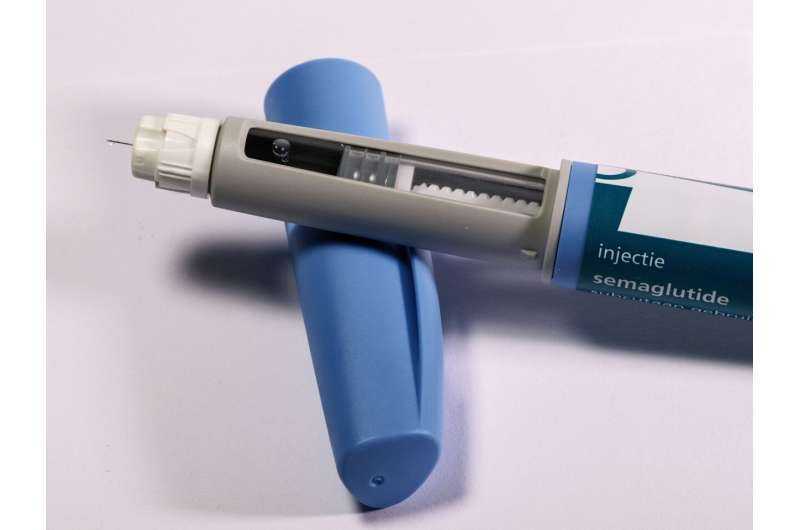
Can Ozempic prevent cancer? A doctor explains why the headlines are easy to misread | Ziyad Al-Aly, Medical Xpress

In the weeks around the 2026 annual meeting of the American Society of Clinical Oncology, my phone kept buzzing with alerts about GLP-1 drugs and cancer. The headlines were everywhere—from NPR and The Washington Post to Substack and heated exchanges on social media—all circling the same claim: Ozempic might lower the risk of cancer.

Only for Supporters
To read the rest of this article and access other paid content, you must be a supporter
Read full Article
post photo preview
European Drone Warfare Goes Operational: $49B in Commitments This Month | Roger Satterfield, Techtimes

In the first two weeks of July 2026, five of the largest defense investment decisions in modern European history arrived within days of one another: a $1.8 billion private fundraise for an AI defense startup, a NATO-wide $40 billion counter-drone commitment, a single German contract to deploy 50,000 AI-guided attack drones in Ukraine, a £5 billion British transformation program explicitly committing to weapons that make targeting decisions without per-strike human authorization, and a fresh $1.2 billion raise for a drone maker that positions itself as Europe's answer to Lockheed Martin. The convergence, reported today in a major CNBC synthesis, is not coincidental. It reflects a structural judgment: autonomous, software-defined warfare is no longer experimental. What drove each of these decisions to the same two-week window is the same thing driving all of them — a piece of palm-sized hardware that has quietly validated the entire premise of the investment surge in Ukrainian skies.

Only for Supporters
To read the rest of this article and access other paid content, you must be a supporter
Read full Article
post photo preview
Democrats Turn To ‘Economic Democracy,’ And You Already Know What They Mean | Chris Bray, The Federalist

“We cannot save our democracy unless we democratize our economy.” A truck is backing up to the loading dock, delivering a giant cargo of old wine in new bottles. You’re going to be hearing more of this language.

Only for Supporters
To read the rest of this article and access other paid content, you must be a supporter
Read full Article
Available on mobile and TV devices
google store google store app store app store
google store google store app tv store app tv store amazon store amazon store roku store roku store
Powered by Locals